Sourcing sustainability: Why Australian macadamias offer a natural ingredient advantage

As sustainability expectations reshape global ingredient sourcing, many brands are prioritising inputs that align with regenerative farming systems and responsible production. Australian macadamias are one such ingredient, with a sustainability story that begins with the crop’s origins.

Macadamias first evolved in Australia more than 60 million years ago, making it not only one of the world’s major producers but also the crop’s natural home. That evolutionary history continues to shape how the industry approaches sustainability today.

From orchard ecosystems designed to support biodiversity to research-led farming practices that build soil health and sequester carbon, the Australian industry demonstrates a clear connection between origin, ecology and modern regenerative agriculture.

Across global food systems, this kind of approach is increasingly becoming a baseline expectation.

“Sustainability is no longer a box to be ticked that determines whether you receive a premium for your product or not,” says Australian Macadamias Industry Development Manager and 2024 Nuffield Scholar Leoni Kojetin. “It’s now standard operating procedure. If you’re not farming sustainably, you’re going to find it difficult to sell your product.”

Origin: the wild and wonderful advantage of a native crop

Macadamias evolved in Australia and thrived here for millions of years with no human input. This means macadamia trees are naturally adapted to Australia’s variable rainfall, temperature extremes and climatic fluctuations, allowing growers to work with the natural environment rather than against it.

“In Australia we can grow macadamias with relatively low intervention because it’s the place where they grow naturally,” says Leoni.

“Unlike some regions where artificial environments need to be created to protect crops, macadamias evolved here. That gives the Australian industry a natural advantage when it comes to sustainable production.”

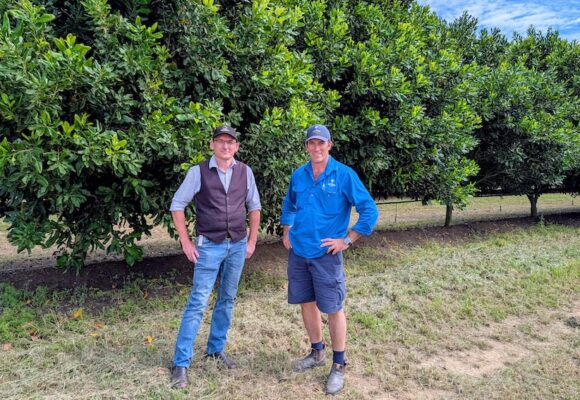
Leoni Kojetin, Australian Macadamias Industry Development Manager

As the natural home of macadamias, Australia is also the only place on earth where macadamias grow wild. Every macadamia tree in the world traces back to these native populations. With all four wild species now under threat, the industry actively supports efforts to protect wild macadamia trees in their natural habitat. Leoni says these wild populations play an important role in the future of commercial production.

“We have a unique opportunity to learn from nature. Researchers are analysing soils around these wild trees to understand the conditions that allow them to thrive naturally,” she says. “We’re hoping those learnings will help growers build stronger, more adaptive soils across all growing regions, with systems that are self-supporting and able to adapt to change.”

Building productivity through biodiversity

While macadamias are naturally suited to Australia’s climate, the industry’s understanding of how orchards function as living ecosystems has evolved significantly and they are now intentionally designed and managed to work in partnership with nature.

The relationship between biodiversity and soil is crucial to this and it has transformed orchard management, particularly the space between tree rows.

“The space between the rows of macadamia trees was once seen as nothing much more than a roadway for driving a harvester. We used to mow the grass between rows within an inch of its life and orchards looked like golf courses!” recalls Leoni.

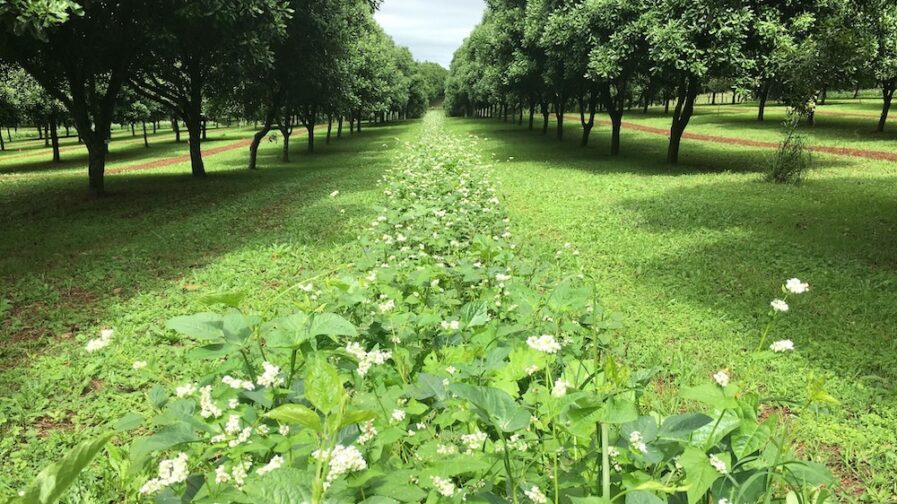
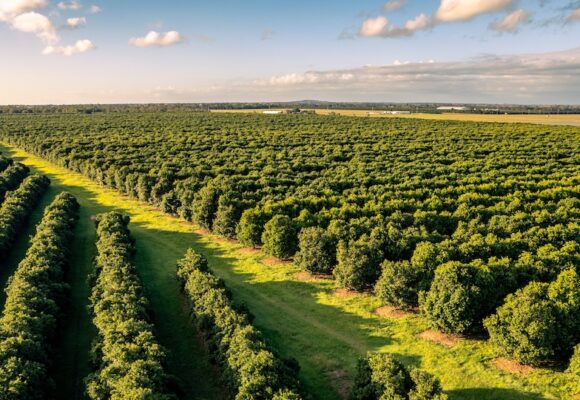
Interrow plantings in an Australian macadamia orchard

“But we now know that these areas are perfect for introducing a variety of different grasses, legumes, brassicas and flowering plants. They’ve become these amazing biodiverse areas that support beneficial insects and pollinators.”

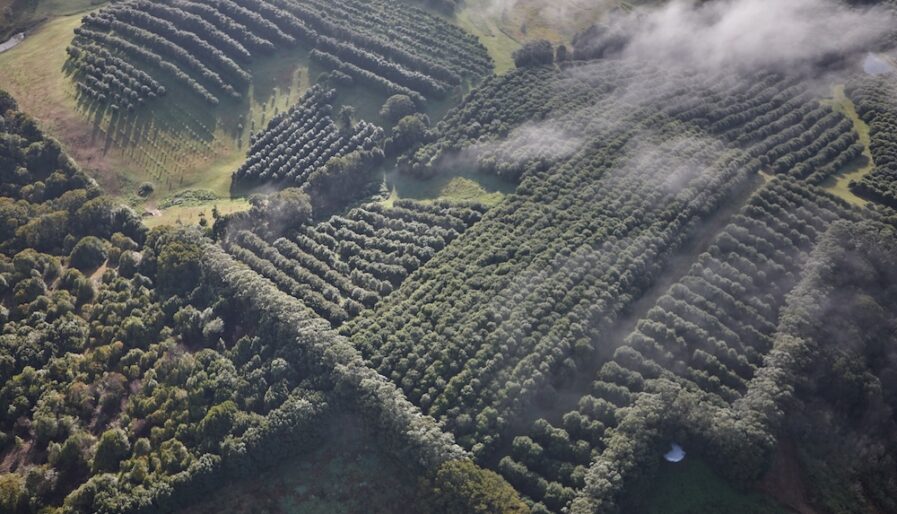
In addition to inter-row planting, many growers are now planting a variety of species on the outer zones of their orchards and in bordering areas and riparian zones. This diversity does more than boost soil health. It rebuilds a living system underground, supporting an incredible level of biological activity, nutrient cycling and soil structure.

“There is more life and biodiversity under the ground than above it, and what’s below ground is just as important as what’s above it,” Leoni explains. “Our growers know that soil is much more than just a medium to grow trees. Historically, agriculture has focused on adding minerals and fertiliser to soil to improve productivity. Today, macadamia growers are taking a different approach, rebuilding self-sustaining, adaptive ecosystems underground. It’s the new frontier that goes beyond just increasing the carbon content of the soil.”

Leoni likens it to building an “underground zoo” of beneficial bacteria and fungi, creating soils that can hold water, cycle nutrients and buffer against temperature extremes.

She says biodiversity is increasingly the focus in the broader sustainability conversation and while understanding and adoption varies between producers and crops, for Australia’s macadamia industry, productivity and biodiversity are now firmly linked.

 “We aim to meet productivity goals via biodiversity in the macadamia industry. By tying the two together it drives us to find productivity and biodiversity streams that go hand in hand. We are learning how to produce bigger and better quality macadamia crops while also creating a more natural orchard.”

From principle to practice: regenerative farming at scale

Australia’s macadamia growers are applying regenerative practices that deliver outcomes including carbon positivity, circular resource use, water efficiency and biological pest control.

Australia’s 14 million macadamia trees play an active role in removing CO2 from the atmosphere, with their size, foliage and long life span meaning they can hold considerably more carbon than other crops. The average Australian macadamia orchard sequesters more than 17.6 tonnes of carbon (CO2e) per hectare per year from the trees alone, with further carbon stored in soils, inter-row plantings and biodiversity zones.

A Northern Rivers macadamia orchard with diverse species planted in bordering areas

Australian macadamia growers and processors treat by-products such as foliage, husks and shells as valuable resources rather than waste, returning them to orchard systems to support soil health and close carbon and nutrient loops.

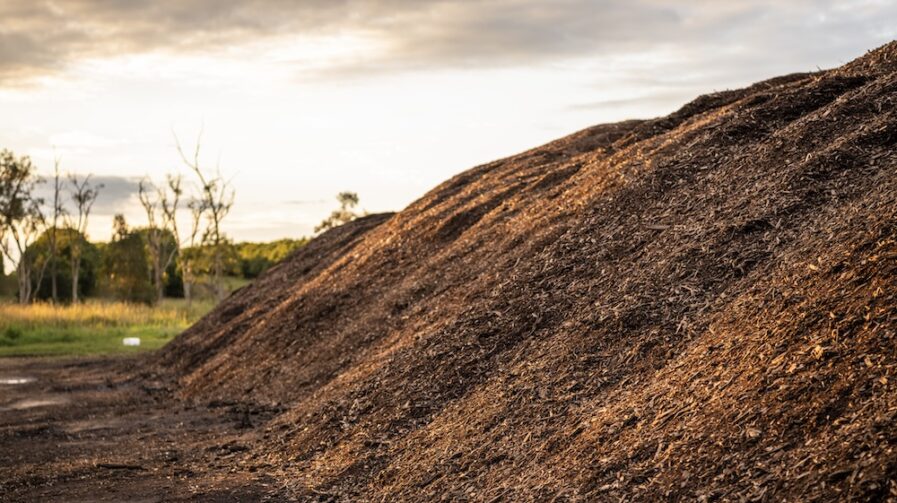
Organic matter including prunings and foliage is left beneath the trees to reintegrate into the soil, while the outer husks are composted. This nourishes soil biology, replenishes nutrients and contributes to carbon storage in the ground. Macadamia shells are also put to productive use after processing, including as a renewable fuel source for electricity generation.

Composted organic matter ready to be returned to the orchard soil

Australian macadamia growers’ approach to water management reflects the inherently water-smart nature of the macadamia tree. Having evolved in the Australian environment, the tree has developed internal mechanisms that allow it to regulate water use and remain resilient in dry conditions.

“Macadamia trees have an incredible ability to optimise their water use by closing their stomata during periods of low moisture or high heat,” says Leoni. “This prevents excessive water loss and helps the tree remain resilient even in very dry conditions.”

Scientific analysis of sap flow data has confirmed this efficiency, and growers are using these insights to refine irrigation practices.

“Macadamias are a relatively low water-use crop compared to many others,” says Leoni. “Their inherent efficiency means growers can minimise intervention while maintaining consistent production, increasingly using precision irrigation to apply water only where and when it’s needed.”

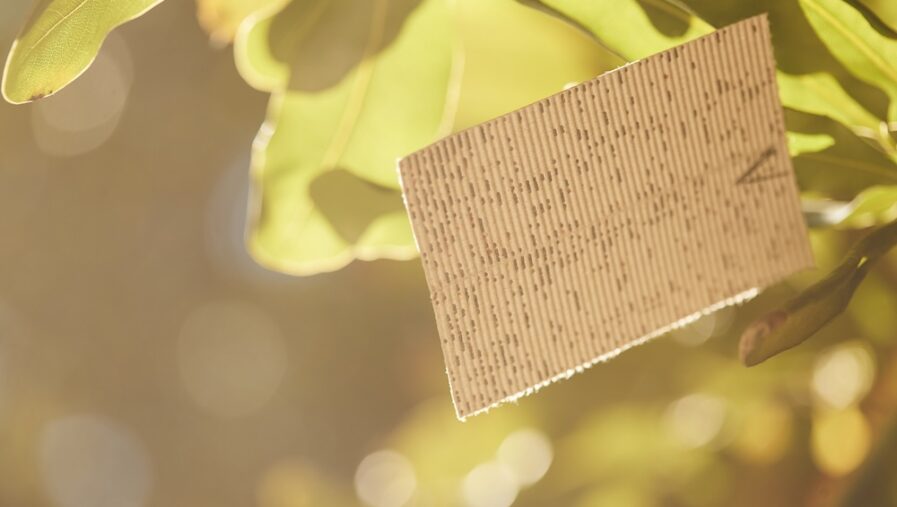
Australia’s macadamia industry has a long-standing focus on managing pests and disease through biological controls. Growers use the Trichogramma wasp to combat nut borer, while barn owls provide a chemical-free way to control rodents. Alongside these established practices, research into entomopathogenic fungi as a natural pest control solution is underway, potentially expanding growers’ biological toolkit.

Trichogramma wasp cards attached to macadamia trees. The cards contain wasp eggs that hatch within days, providing natural protection against nut borer.

Stewardship in action

For many growers, sustainability is closely linked to stewardship. Across Australia’s macadamia growing regions, conservation areas are maintained within and around orchards to protect native vegetation and support biodiversity. These landscapes play a critical role in maintaining the ecological systems that underpin production.

“Australian macadamia farmers are stewards of the land on which they grow, and they operate in a way that actively supports conservation,” says Leoni.

Her international research reinforced that perspective.

“I visited many countries and saw a plethora of agricultural systems during my Nuffield Scholarship studies. What stood out to me was the level of environmental care Australian macadamia growers put into how they farm, and how strongly sustainability is embedded in our production systems. It made me feel incredibly proud.”

For brands seeking ingredients aligned with the future of sustainable food production, it is a story worth understanding.

訂閱夏威夷果評論

Our monthly e-newsletter

  • 同意我們收集您的個人資訊以便與您聯絡。請詳見隱私政策 privacy policy

新聞 & 報告

See more news

對 2026 年澳洲夏威夷果產量審慎樂觀

根據由昆士蘭州農業與漁業部門*開發的科學建模氣候預測,2026 年澳洲夏威夷果產量預估將達 59,080 公噸(以 3.5% 含水率計算之帶殼重量),或 63,350 公噸(以 10% 含水率計算)。
Macadamia nuts and macadamia ice cream in cones

從小眾走向下一波浪潮:為何夏威夷果正蓄勢待發,成為全球冰淇淋創新的關鍵角色

幾乎沒有任何品類能像冰淇淋一樣,擁有如此普遍且跨文化的吸引力。即使消費者的期待不斷演進,冰淇淋依然是許多人心中真正情有獨鍾的品項。在全球市場中,消費者正更仔細地關注配料、口感、營養價值與產地來源,重新定義冷凍甜點中「高端」的樣貌。在這樣的背景下,夏威夷果正逐漸受到關注,成為一項具策略價值、但仍被低度開發的原料,為產品開發者帶來極具吸引力的機會。

創新、洞察與產業動能:2025 年六則值得關注的澳洲夏威夷果焦點故事

隨著 2025 年告一段落,這一年很可能會被記住為一個在全球市場中充滿積極辯論與調整的年份。通膨與生活成本壓力持續是許多經濟體關注的核心議題,各國政府與企業也努力因應人工智慧所帶來的快速變革步伐,而地緣政治局勢的變動則影響了貿易政策、關稅與供應鏈。這些因素共同構成了食品製造商、原料供應商與品牌經營者在一年之中所必須面對與航行的整體環境。

SUBSCRIBE TO THE MACADAMIA REVIEW

and be the first to know about the latest news from the Australian macadamia industry.

Subscribe