Not so long ago, a snack simply had to taste good. Today, it has to earn its place. Consumers are becoming more intentional about when they snack, why they snack and what they expect from each occasion. Whether seeking nourishment, energy, indulgence or an emotional lift, products are increasingly judged on how well they meet a specific need.
According to Hansika Subramanian, Principal Analyst, Global Food & Drink at Mintel, taste, quality ingredients and health remain fundamental, but they are no longer enough on their own.
“Consumers are also looking for products that offer novelty, emotional relevance, provenance and experiences that justify their place in increasingly considered eating routines,” she explains.
As consumers become more selective about what they eat and when, brands are competing harder for fewer, more considered eating occasions. Drawing on consumer research from markets around the world, this analysis explores how premium is evolving, how snacking motivations are changing, and why Australian macadamias are naturally aligned with these shifts.
Premium has a new definition
Premium is a well-worn descriptor in food marketing, but consumers are becoming far more discerning about what actually deserves it and how value is delivered.
Consumers still associate premium with good taste, quality ingredients and meaningful health benefits. In Australia, around 55% of snackers aged 18–34 would pay more for higher-quality ingredients and 56% for healthy ingredients. But these attributes are no longer differentiators. They’re the baseline.
What elevates a product beyond these fundamentals is the value consumers can experience, understand or verify. Mintel sees that value falling into three broad areas:
- Health value – functionality, nutrient density and fewer empty calories.
- Experiential value – flavour, discovery, excitement and sensory appeal.
- Emotional value – reward, comfort, reassurance and mood enhancement.
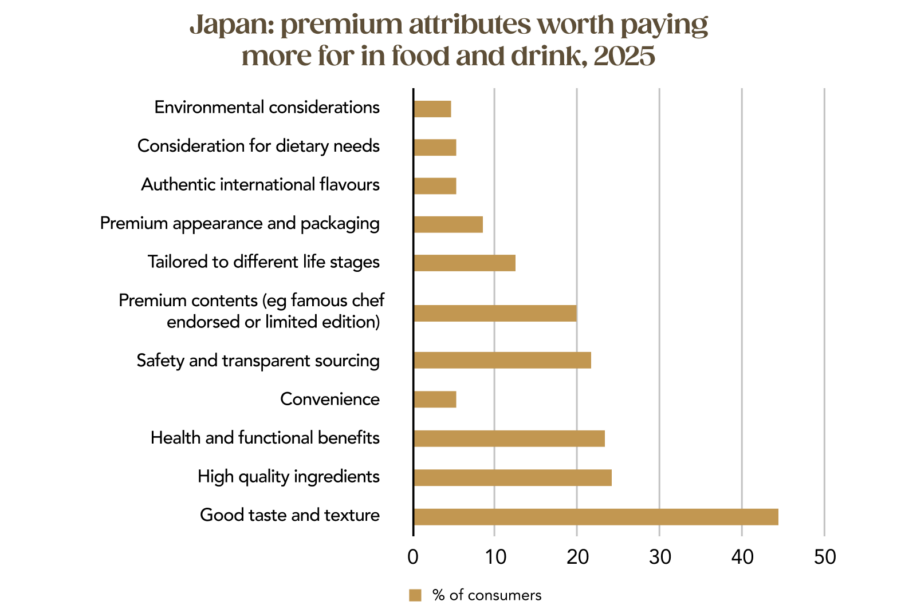
In Japan, premium is associated with taste, texture, ingredient quality and sourcing transparency. In the UK, 55% of snack consumers say a new flavour prompted them to buy a salty snack in the past month, highlighting the value of discovery. In China, concerned parents place a premium on reassurance through clean ingredient lists, added nutrients and age-appropriate products.
Foodservice is also raising the bar, with packaged products borrowing cues such as imported ingredients, traceable sourcing and distinctive cooking techniques to signal craft and quality.
Products that deliver one or more of these forms of value can justify a premium position. Those that don’t may find it harder to command one.
Consumers aren’t just feeding hunger anymore
Hunger still matters, but it now has more competition. Consumers are increasingly snacking to treat themselves, relax, lift their mood or overcome boredom.
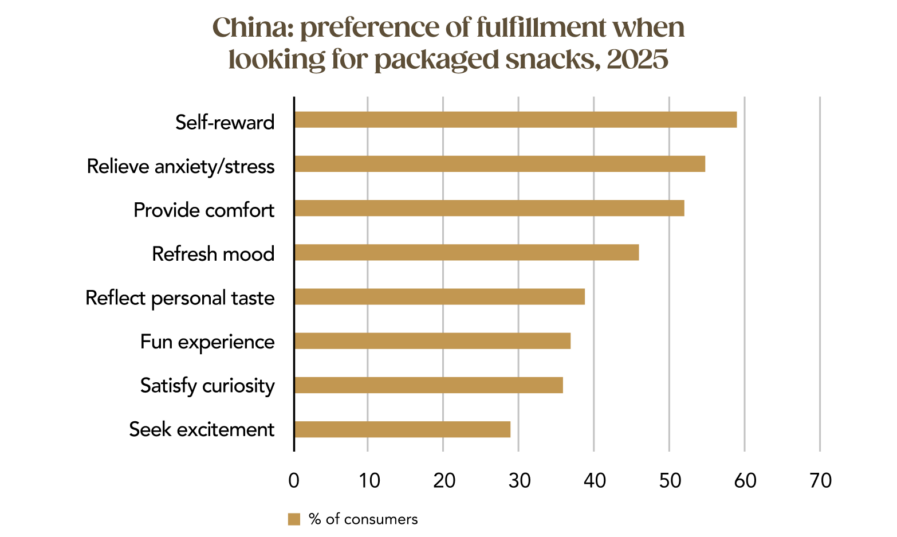
China illustrates the shift clearly. Consumers are choosing snacks according to how they feel and how they want to feel. Mood influences whether they reach for sweet or savoury options, while snacks are increasingly expected to deliver excitement, comfort, self-reward or stress relief.
Motivations also shift throughout the day. In the US, morning and afternoon snacking is more strongly associated with health, energy, protein and fibre, while evening occasions lean towards self-treating.
Snacks are also increasingly replacing meals, particularly among younger consumers. Convenience is a motivator, but so are variety, flexibility and small moments of joy. Snackification is being driven as much by enjoyment and personal preference as by time pressure.
For manufacturers, this opens up a more nuanced innovation landscape. Understanding the need state and daypart can inform everything from nutritional profile and portion size to flavour, format and positioning.
Three shifts changing the snacking landscape
Beyond changing motivations, Mintel identifies three developments that could have a significant bearing on where the category heads next.
- Morning moves into focus
One of the more unexpected shifts is the growing importance of morning and midday snackification.
“Historically, we expected meal replacement to show up later in the day, but some of the strongest momentum is emerging in morning and midday occasions,” says Hansika.
Consumers are looking for lighter breakfast options that still deliver satiety, nutrition and variety, creating fertile ground for nuts. For Australian macadamias, Hansika sees an opportunity to build stronger associations with breakfast, morning energy and better-for-you snacking.
- GLP-1 raises the bar
GLP-1 medications are often framed as a threat to snacking, but Mintel sees a more nuanced picture.
“While overall snacking occasions may decline among some GLP-1 users, the desire to indulge has not disappeared,” says Hansika. “Instead, consumers are becoming more selective about which snacks earn a place in their diets.”
Fewer or smaller eating occasions raise the bar: nutrient density and functionality matter, but so do flavour, sensory experience and genuine enjoyment.
- The boundaries of snacking are expanding
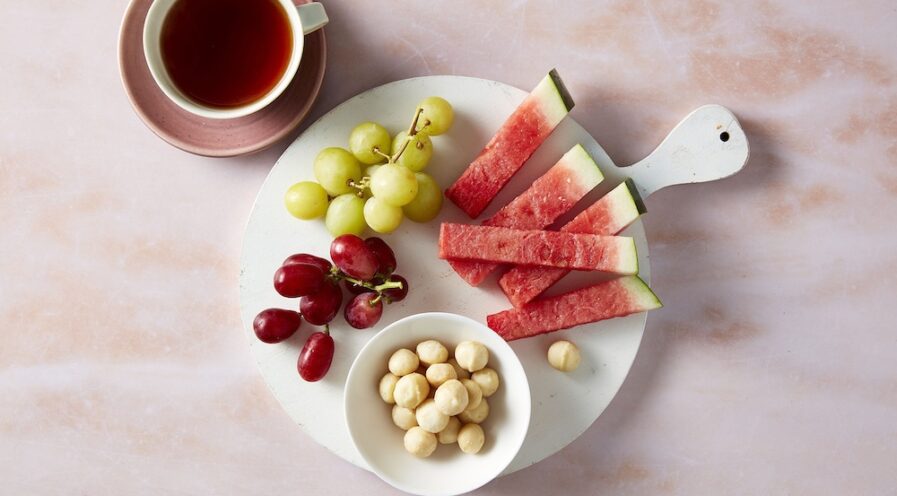
The snack aisle is no longer the only place snacks compete. Fresh produce, dairy, dips, protein plates and chilled combinations are increasingly competing alongside traditional shelf-stable snacks such as chips, popcorn and bars.
“As health, freshness and clean-label expectations rise, consumers are broadening what they consider a snack,” says Hansika.
For manufacturers, that widens both the competitive set and the innovation opportunity.

Flavour is becoming a premium signal
Flavour is becoming one of the clearest ways to signal premium value, with four distinct innovation directions emerging across global markets.
Borrow from adjacent categories: In North America, nuts are taking cues from crisps, dips and sauces, with profiles such as umami, ranch, buffalo and barbecue.
Create complexity through contrast: In Europe, sweet-heat and creamy-savoury combinations are adding sophistication without becoming unfamiliar.
Balance heat with refreshment: In Asia, Sichuan pepper and five spice are being layered with citrus, tea, matcha and botanicals.
Bring wellness into flavour: In Australia and New Zealand, lemon myrtle, passionfruit, kombucha and botanicals are signalling freshness and better-for-you appeal.
Why this matters for Australian macadamias
Australian macadamias are unusually well placed to meet these changing expectations. Their nutrient density and healthy fat profile support health-led positioning, particularly in morning occasions. Their natural creaminess provides a strong platform for flavour innovation and premium eating experiences, while credible provenance offers reassurance and their inherent indulgence delivers emotional reward.
Few ingredients span all three value drivers so naturally. For manufacturers, that gives Australian macadamias relevance across health, experience and emotion, not simply a premium price point.
For support formulating snacking products with macadamias, explore our technical resources. To find a trusted Australian supplier of bulk macadamia kernel explore our supplier directory.
This article is based on bespoke analysis conducted by Mintel in July 2026 for Australian Macadamias, drawing on consumer research and market insights from around the world.