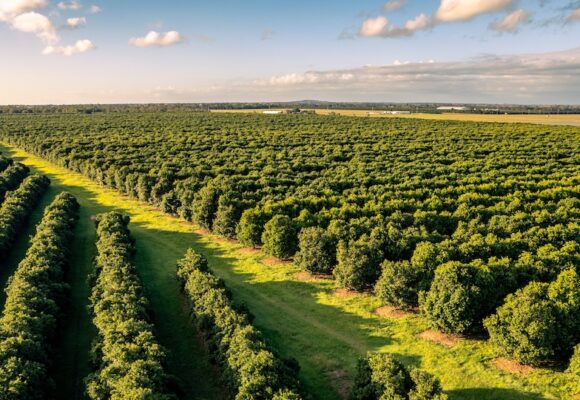
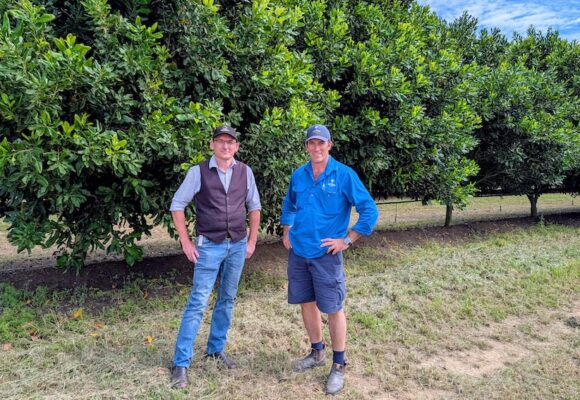
Australian macadamia growers are using scientific research to understand the inherently sustainable characteristics of the macadamia tree and guide the adoption of sustainable on-farm practices in order to meet the demands of today’s conscious consumer.

One third of consumers forwent their favourite brands last year due to sustainability considerations, and the Australian macadamia industry is embracing the opportunity this presents. Demand for transparency is at an all-time high and sustainable production is a non-negotiable for many. Now and in the future, selecting ingredients that have resilience to production pressures, and therefore reduced environmental impacts, will be increasingly desirable to both producers and consumers.
While manufacturers already understand the taste, texture, luxury and health that macadamias can bring to a product, it’s exciting to share the sustainability credentials macadamias can now deliver too, from water use efficiency and carbon sequestration to minimisation of carbon outputs, recycling of by-products and world’s best biological control.
Research unveils the inherent sustainability of the macadamia tree
The macadamia tree is a sustainability giant of the plant world, thanks to its inherent ability to optimise its water use, and sequester carbon from the atmosphere.
Recent scientific analysis of sap flow data from macadamia orchards in Queensland has revealed that macadamia trees rationalise available water more efficiently than previously estimated. This is due to the tree’s clever internal water management system that shuts down the tree’s stomatal pores during times of low moisture, making the tree resilient to its environment, particularly drought.[1]
So, while changes to our external environment can significantly stress other crops causing inconsistent yields and impacts to the supply chain, the macadamia tree has an incredible natural ability to weather volatile conditions. This in-built resilience makes it a certain crop, even in uncertain times.
These findings pave the way for growers to adopt smarter, more efficient irrigation schedules and water management, minimising the need for excessive intervention, while maintaining a reliable supply.
In separate research findings, [2] it has also been discovered that the average Australian macadamia orchard removes more than 17 tonnes gross and 14.5 tonnes nett of carbon per hectare per year from the atmosphere. The macadamia tree’s size, volume of foliage, and long lifespan mean that every tree can hold a substantial amount of carbon, more so than many other crops.
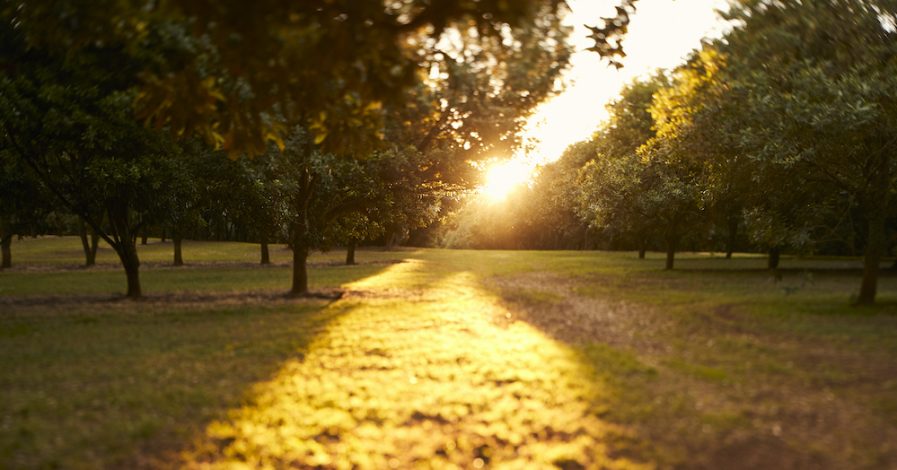
Australian growers minimise their carbon and waste footprint
Australia’s 800-odd macadamia growers are determined to tread as lightly in the orchard as possible.
As well as absorbing carbon, Australia’s macadamia industry limits its carbon output by minimising the use of heavy diesel-consuming machinery and transportation. Human intervention in the orchard is light, and processing facilities are located within major growing regions, ensuring the nuts don’t have to travel far from the tree to be shelled, dried and packed.
Growers ensure every part of the macadamia tree and nut is either reused or recycled, with nothing going to landfill. Macadamia shells are used to generate electricity or made into stock feed, and any organic matter such as branches or foliage are returned to the earth beneath the tree to be reabsorbed by the soil from which they originally grew.
Working with nature, not against it
Australia’s macadamia industry sees no trade-off between sustainable growing practices and productivity. In fact, it’s quite the opposite. Growers see sustainability working hand in hand with productivity, and this is driving innovative thinking on-farm, increased biodiversity, and development of effective biological controls.

The industry works with nature as much as possible, as demonstrated by the extensive implementation of pest suppressive landscapes. It’s a practice that centres on increasing biodiversity to bring balance to the natural environment and allow beneficial insects that suppress harmful pests to thrive. This is achieved by planting diverse species around the macadamia trees and actively sowing inter-rows between tree rows with a host of different vegetation including grasses, legumes and brassicas, as well as floral coverage to encourage natural pollinators. [3]
The Australian macadamia industry has a long history of combating pests and disease through the use of biological controls, with the best-known initiative being the introduction of the Trichogramma wasp as a natural and highly effective tool in the fight against nut borer.
Australia is now at the forefront of another big development in biological control, with trials of entomopathogenic fungi as a natural pest control due for completion soon. [4]
Researchers have isolated the most effective fungi and are conducting trials in orchard to determine the best time of the season to use them. With Australia’s macadamia growers so passionate about farming in an eco-sensitive way, this will be another effective bio control tool they can leverage.
[1] Summer 2019 AMS Bulletin Volume 47 Number 4, Tree Water Management Special Feature, Dr Dan Manson, Tree Physiologist and Theunis Smit, Horticulturist
[2] Murphy Tim, Graham Jones, Jerry Vanclay, Kevin Glencross; (2013) Agroforest Syst 87:689-698. Preliminary carbon sequestration modelling for the Australian macadamia industry.
[3] Dr Abigail Makim and Dr Christopher Carr, “Piccadilly Park” – Macadamia Inter Row Project Results, April 2020
[4] Kim Khuy, University of Southern Queensland in collaboration with NSW Dept. of Primary Industries and QLD Dept. of Agriculture & Fisheries.