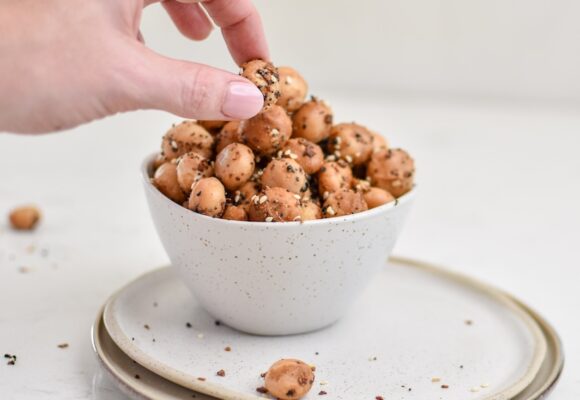
Eating 2 or 3 servings per week (28-57g) of nuts can reduce the risk of several types of cancer.
February 2016- Adding nuts to your diet is associated to a reduction in the risk of cancer. This is the main conclusion of multiple studies that have shown that eating 2 or 3 servings per week (28-57 g) of nuts, such as peanuts, walnuts or almonds, is associated to a reduction in the risk of some types of cancer (breast, colon, pancreatic and lung cancer).
A study by Dr. Soriano-Hernandez and his team at the University of Colima (México) has concluded that frequent consumption of peanuts, walnuts or almonds is associated to a reduced risk of breast cancer by a factor of 2 or 3. Researchers analysed 97 patients with breast cancer and 104 control subjects who did not have the pathology. Another study from Brigham and Women’s Hospital, Harvard Medical School (USA) showed that eating 2 servings of nuts per week during adolescence is associated to a 36% lower risk of breast cancer compared to women consuming less than 1 serving per month.
Different studies have shown that nut consumption can reduce the incidence of colon cancer as well. In 2004, the European Prospective Investigation into Cancer and Nutrition showed a reduced incidence of colon cancer in women who ate an average of 16 g of nuts and seeds daily. This study revealed that women who consumed more than 6.2 g per day of nuts and seeds was associated to a 31% lower risk of colon cancer . Earlier this year, a team of researchers from Brigham and Women’s Hospital, Harvard Medical School (USA) found that women who consumed nuts twice or more per week (approx. 56 g per week) had a 13% lower risk of colorectal cancer compared with women who rarely consumed nuts.
Furthermore, eating just 2 servings (28 g) is associated with a 32% lower risk of pancreatic cancer among women and researchers from the DCCPS National Cancer Institute (Maryland, United States) have reported that nut consumption was statistically associated with a reduced risk of lung cancer.
The conclusion is that eating nuts is not only associated with a lower risk of cancer but also a reduced risk of death from cancer. These are the results of the PREDIMED study (PREvención con DIeta MEDiterranea), which indicated last year that participants who habitually had 3 servings (57 g) per week of nuts enjoyed a 40% reduction in deaths from cancer .
About the International Nut & Dried Fruit CouncilThe International Nut & Dried Fruit Council (INC) members include nearly 700 nut and dried fruit sector companies from over 70 countries. INC is the international organisation of reference regarding health, nutrition, statistics, food safety, international standards and regulations relating to nuts and dried fruit.
1.Soriano-Hernandez AD, Madrigal-Perez DG, Galvan-Salazar HR, Arreola-Cruz A, Briseño-Gomez L, Guzmán-Esquivel J, Dobrovinskaya O, Lara-Esqueda A, Rodríguez-Sanchez IP, Baltazar-Rodriguez LM, Espinoza-Gomez F, Martinez-Fierro ML, de-Leon-Zaragoza L, Olmedo-Buenrostro BA, Delgado-Enciso I. The protective effect of peanut, walnut, and almond consumption on the development of breast cancer. Gynecol Obstet, Invest, 2015;80(2):89-92. Doi: 10.1159/000369997. Epub 2015 Jul 10.
2.Xuefen Su, Rulla M. Tamimi, Laura C. Collins, Heather J. Baer, Eunyoung Cho, Laura Sampson, Walter C. Willett, Stuart J. Schnitt, James L. Connolly, Bernard A. Rosner, and Graham A. Colditz. Intake of Fiber and Nuts during Adolescence and Incidence of Proliferative Benign Breast Disease. Cancer Causes Control. 2010 Jul; 21(7): 1033-1046. Published online 2010 Mar 14. doi:10.1007/s10552-010-9532-7.
3.Jenab M, Ferrari P, Slimani N, Norat T, Casagrande C, Overad K, Olsen A, Stripp C, Tjonneland A, Boutron-Ruault MC, Clavel-Chapelon F, Kesse E, Nieters A, Bergmann M, Boeing H, Naska A, Trichopoulou A, Palli D, Krogh V, Celentano E, Tumino R, Sacerdote C, Bueno-De-Mesquita HB, Ocke MC, Peeters PH, Engeset D, Quiros JR, Gonzalez CA, Martinez C, Chirlaque MD, Ardanaz E, Dorronsoro M, Wallstrom P, Palmqvist R, Van Guelpen B, Bingham S, San Joaquin MA, Saracci R, Kaaks R, Riboli E. Association of nut and seed intake with colorectal cancer risk in the European Prospective Investigation into Cancer and Nutrition. Cancer Epidemiol Biomarkers Prev. 2004; 13(10):1595-1603.
4.M Yang, F B Hu, E L Giovannucci, M J Stampfer, W C Willett, C S Fuchs, K Wu and Y Bao. Nut consumption and risk of colorectal cancer in women. European Journal of Clinical Nutrition (6 May 2015) | doi:10.1038/ejcn.2015.66.
5.Bao Y, Hu FB, Giovannucci EL, Wolpin BM, Stampfer MJ, Willett WC, Fuchs CS. Nut consumption and risk of pancreatic cancer in women. Br J Cancer. 2013;109:2911-2916.
6.Jenifer Lee, Tram Lam, Dario Consonni, Angela Pesatori, Pier Bertazzi and Maria Landi. Association of Nut Consumption and Lung Cancer Risk in a Large Population-based Case-control Study. The FASEB Journal vol. 29 no 1 Supplement 736.11. April 2015.
7.Guasch-Ferré M, Bulló M, Martínez-González MÁ, Ros E, Corella D, Estruch R, Fitó M, Arós F, Wärnberg J, Fiol M, Lapetra J, Vinyoles E, Lamuela-Raventós RM, Serra-Majem L, Pintó X, Ruiz-Gutiérrez V, Basora J, Salas-Salvadó J; PREDIMED study group. Frequency of nut consumption and mortality risk in the PREDIMED nutrition intervention trial. BMC Med. 2013 Jul 16;11:164.doi:10.1186/1741-7015-11-164.