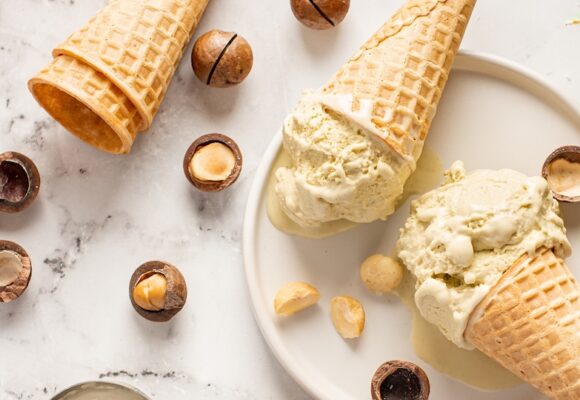
Iconic Japanese chocolate brand Meiji recently released the latest incarnation of its much-loved macadamia chocolate, with the release of the limited-edition Macadamia Fuwari (lightly scented) Hojicha Chocolate.
In a move designed to appeal to a female millennial audience, Meiji has embraced hojicha roasted green tea – a hot new flavour trend – and paired it with macadamias and milk chocolate to create a deliciously smooth and delicate sweet treat.
A perfect pairing
Meiji’s product development team discovered the taste of the macadamia was the ideal companion for that of hojicha, with both ingredients displaying soft and subtle flavours.
The macadamia kernel is first roasted, to bring out the nut’s sweetness and aroma, and then encased in milk chocolate that has been lightly infused with the aroma of hojicha.
“Hojicha is roasted, which removes any bitterness and delivers a soft flavour. The roasted flavour of the tea matches that of the roasted macadamia. Overall, gentleness and premium quality are well expressed in this chocolate,” explained a Meiji spokesperson.
Hojicha on the rise
Hojicha is a traditional Japanese green tea that is roasted to deliver a dark brown appearance and earthy, nutty flavour. Low in caffeine, it is traditionally enjoyed at the end of a meal.
The tea is fast becoming a favourite flavour in Japan, particularly in sweet products, hot on the heels of the popularity of matcha, with an estimated 90 new hojicha flavoured drinks and food products launching in Japan in 2017. While it has appeared in an impressive array of product categories, from ice cream, desserts and coffee to rice, pasta and even perfume, Meiji’s new product is the first macadamia and hojicha pairing in the Japanese chocolate confectionery category.
It’s a flavour that is also trending elsewhere, with Bangkok’s After You Dessert Café producing an Insta-famous hojicha shaved ice, New York’s Cha-An Teahouse featuring it in both ice cream and jelly, while in Singapore, Starbucks has a Hojicha Frappuccino which was also available in Japan. In Australia, it’s starting to appear in boutique patisseries but is yet to hit the mainstream.
Health and authenticity in demand
Meiji believes health and authenticity are the key drivers of innovation in Japan’s chocolate confectionery market at the moment. “Japanese consumers want products that appeal to their growing health consciousness. There is a lot of interest in the use of things like cacao polyphenols, lactic acid bacteria, and indigestible dextrin,” says a Meiji spokesperson.
“They are also seeking products that demonstrate a preference for authentic ingredients, such as cacao sourced from a particular origin.”
Meiji is hoping its use of hojicha – which has a healthy image with consumers – will broaden the appeal of its macadamia chocolate beyond the current fan base, and in particular capture the younger female market.
“We would like to see younger generations eating more macadamia nuts,” says the company’s spokesperson.
“Currently, consumers in their 40s and 50s consume our macadamia chocolate more, because our signature product has maintained the same delicious taste from the start. Younger consumers favour milk and white chocolate, particularly when combined with ingredients that have a healthy image. They’re looking for products that are perceived as gentle and healing, and that’s what we have created with our Macadamia Hojicha Chocolate.”
According to Meiji, chocolate containing healthy ingredients such as kinako (powdered beans), brown rice and grains have performed well in Japan, thanks to younger consumers’ growing desire for products that not only taste good but are better for you.
“Natural ingredients such as hojicha and macadamias tap into this trend as they are regarded as good, healthy ingredients,” says Meiji’s spokesperson.
Meiji’s experience is backed by findings from the latest Global Food and Beverage Trends research, with ‘Control of health’ and ‘No filter’ identified as two of the key macro trends driving food and beverage purchases right now. Consumers in both Asian and western markets are embracing health as a currency and actively look for ways to build health into all moments of the day. They’re also demanding absolute transparency in terms of ingredients, source, production methods and sustainability.
Both these trends offer up rich territory for macadamias, and Meiji’s latest product launch brings this to life perfectly. Launched in early June and available until early autumn, macadamias and hojicha are proving to be a winning combination, with solid early sales, and excellent uptake by the target audience of millennial women. It spells another exciting chapter for Japan’s ever-popular chocolate brand.